Employee Misconduct Investigation Hawaii: Key Steps
A complaint may arrive as a brief email, a supervisor’s concern, an anonymous report, or an abrupt change in a workplace relationship. The first hours of an employee misconduct investigation Hawaii employers handle can shape whether the matter produces reliable facts or becomes a larger legal, operational, and reputational problem. A prompt response matters, but speed should not be confused with a rushed conclusion.
The objective is not to validate an allegation or protect a preferred narrative. It is to establish what can be supported by lawfully obtained, properly preserved evidence. For employers, counsel, human resources professionals, and organizational leaders, a disciplined process protects both the reporting party and the employee accused of misconduct while preserving the organization’s ability to make a reasoned decision.
When an Allegation Requires a Formal Investigation
Not every workplace concern calls for the same level of inquiry. A supervisor may be able to resolve a routine attendance discrepancy through ordinary records review. By contrast, allegations involving harassment, discrimination, retaliation, theft, violence, conflicts of interest, falsified records, misuse of confidential information, expense irregularities, or serious policy violations may require a more structured investigation.
The appropriate scope depends on the allegation, the people involved, the available evidence, applicable policies, and the potential consequences. A complaint against a senior executive, for example, may require an investigator who is independent from internal reporting lines. A concern involving digital communications may require immediate preservation of company email, messaging platforms, access logs, mobile devices, or cloud-based records before routine deletion practices affect relevant data.
Employers should also consider whether the matter intersects with a collective bargaining agreement, a government or regulatory obligation, a licensing requirement, an insurance issue, pending litigation, or a criminal allegation. Those circumstances can change the sequence of decisions and may warrant early consultation with legal counsel.
Employee Misconduct Investigation Hawaii: The First Response
The initial response should be controlled and documented. Organizations sometimes make avoidable mistakes by broadly discussing a complaint, confronting the accused employee before evidence is secured, or allowing key records to be overwritten. Confidentiality cannot always be absolute, particularly when witnesses must be interviewed or records reviewed, but information should be limited to those with a legitimate need to know.
A sound first response generally includes identifying the allegation, recording when and how it was received, assessing immediate safety or business-continuity concerns, and determining who should oversee the inquiry. If the allegation creates a credible risk of harm, threats, workplace violence, or evidence destruction, the organization may need interim measures before interviews begin.
Interim measures should not be treated as discipline unless that is the intended and supportable action. Depending on the facts, they may include separating employees, modifying reporting relationships, placing a person on administrative leave, restricting system access, or arranging alternative work schedules. The decision should be proportionate and should not appear retaliatory toward a reporting employee or a witness.
Preserve Evidence Before It Changes
Evidence preservation is often the difference between a credible inquiry and a contest of memory. Relevant information may exist in personnel files, access-control records, security video, email, text messages, chat platforms, expense systems, calendars, timekeeping data, social media content, customer records, and physical documents. Some sources are subject to short retention periods or can be changed easily.
Preservation does not mean indiscriminate collection. Collecting broad quantities of personal or business data without a defined purpose can create privacy, cost, and relevance concerns. The better approach is to identify likely sources, establish a time frame, preserve original data where possible, and document who collected it, when it was collected, and how it was stored.
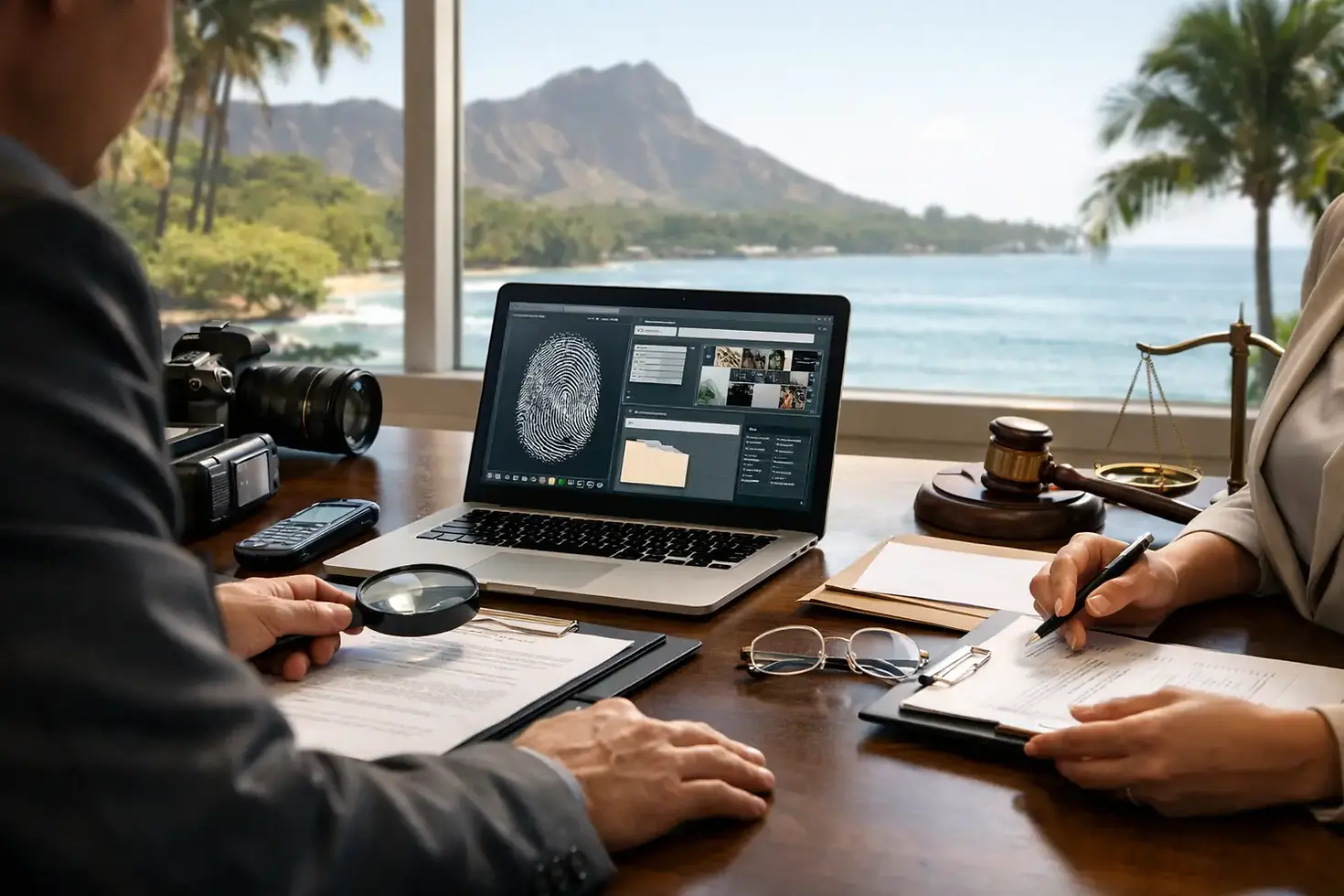
For digital evidence, the method matters. A screenshot may provide useful context, but it may not capture metadata, surrounding communications, account attribution, or evidence that the image has been altered. When digital facts may be disputed or used in litigation, a forensic collection and documented chain of custody may be necessary. The level of technical work should match the stakes and anticipated use of the evidence.
Plan the Inquiry Around Questions, Not Assumptions
Before interviews begin, the investigator should prepare an investigative plan. That plan need not be elaborate, but it should identify the central issues, known witnesses, likely evidence sources, applicable policies, and the sequence of work. Starting with questions keeps the inquiry focused: What conduct is alleged? When and where did it occur? Who may have direct knowledge? What records could confirm or challenge the account?
A narrowly framed allegation can expand as facts emerge. That does not mean every related workplace issue should be absorbed into one investigation. Scope changes should be deliberate, documented, and tied to evidence. An investigation that becomes too broad can delay findings and create confusion; one that is too narrow can miss a pattern of conduct or a material witness.
Hawaii workplaces may include teams spread across Oahu, Maui, Kauai, Hawaii Island, Molokai, and Lanai, along with remote employees and mainland-based management. Distance can affect witness availability, access to physical evidence, and the practicality of in-person interviews. It should not lower the standard for documentation, neutrality, or evidence handling.
Conduct Interviews That Produce Reliable Information
Interviews are not interrogations. Their purpose is to obtain complete, accurate information and allow each person to provide relevant context. The investigator should explain the purpose of the interview, address expectations for candor and discretion, and avoid promises that cannot be kept.
A typical sequence begins with the reporting party or complainant, followed by witnesses with direct knowledge, then the responding employee once sufficient information has been gathered to describe the concern fairly. There are exceptions. If there is a credible risk that notice will lead to destruction of evidence, coordination among involved employees, or immediate harm, evidence collection may need to occur first.
Open-ended questions are generally more informative than leading questions. Rather than asking whether a manager made a particular statement, ask the witness to describe what was said, who was present, what happened next, and whether there are messages, documents, or prior incidents that may be relevant. Follow-up questions can test detail, timing, and consistency without treating normal memory gaps as proof of dishonesty.
The accused employee should have a meaningful opportunity to respond to the material allegations. Fairness is not merely an ethical consideration. It improves the quality of the factual record by identifying alternate explanations, additional evidence, and witnesses that may otherwise be missed.
Evaluate Facts Using a Defensible Standard
Workplace investigations commonly use a preponderance-of-the-evidence standard for internal policy decisions, meaning whether the available information shows it is more likely than not that conduct occurred. However, the applicable standard may differ under a contract, policy, statute, regulatory framework, or public-sector procedure. The organization should identify its standard before reaching findings.
Credibility assessments should rest on specific, documented factors rather than personal impressions. Relevant considerations can include consistency over time, corroboration, plausibility in light of established facts, opportunity to observe, contemporaneous records, and any demonstrated motive to misrepresent. A witness’s position, personality, or relationship with leadership should not substitute for evidence.
Findings should distinguish between what is established, what is not established, and what cannot be determined from available evidence. “Unsubstantiated” does not necessarily mean a report was false. It may mean the evidence did not meet the organization’s standard. This distinction is especially important where a reporting employee may fear retaliation or where an accused employee may face significant professional consequences.
Reporting, Decisions, and Post-Investigation Safeguards
A professional investigative report should be factual, organized, and calibrated to its intended audience. It typically identifies the assignment, allegations reviewed, methods used, evidence considered, interviews conducted, factual findings, and any limitations affecting the inquiry. It should avoid speculation, advocacy, and legal conclusions outside the investigator’s assignment or qualifications.
The investigator’s role and the decision-maker’s role should remain clear. An investigator may provide evidence-focused findings; organizational leadership, human resources, or counsel generally determines corrective action, discipline, reporting obligations, or policy changes. In sensitive matters, separating those functions can reinforce independence.
After the matter is resolved, the organization should consider whether follow-up is needed. That may include checking for retaliation, securing records, addressing a policy gap, providing training, restoring appropriate access, or monitoring a workplace relationship that remains strained. Follow-up should be tailored, not performative.
A carefully managed investigation does more than answer an immediate allegation. It gives decision-makers a documented basis to act fairly, preserve confidence in the process, and respond to future scrutiny with defensible findings rather than assumptions.


Comments