
How Legal Investigation Firms Build Defensible Cases
A disputed text message, an unavailable witness, a former employee with access to sensitive data, or a claim that turns on events no one documented properly can change the direction of a legal matter. Legal investigation firms help clients bring discipline to those facts before assumptions, missing records, or avoidable procedural errors weaken the case.
The objective is not simply to collect information. It is to identify relevant evidence, preserve it appropriately, assess its reliability, and develop findings that can withstand scrutiny by counsel, opposing parties, regulators, insurers, or the court. The right approach depends on the matter, the jurisdiction, the available evidence, and the client’s actual decision-making need.
What Legal Investigation Firms Actually Do
A professional investigative engagement begins with a question that is narrower and more useful than a general request to investigate. An attorney may need to locate and interview a material witness. A corporate legal department may need to understand whether a departing employee removed proprietary information. An insurer may need independently verified facts surrounding a claim. A private client may need documented information for a pending civil or family-law matter.
Legal investigation firms convert those questions into an evidence-focused plan. That plan may involve records research, witness location and interviews, background investigation, digital evidence preservation, social media and online research, field inquiry, surveillance where lawful and appropriate, asset or skip-tracing work, or coordination with forensic specialists. Not every tool belongs in every matter. In fact, applying an intrusive or expensive method without a clear purpose can create unnecessary cost, legal risk, and delay.
The most useful work product is usually more than a collection of raw facts. It should explain what was examined, how information was obtained, what can be independently verified, and where limitations remain. That distinction matters when a client must make a litigation, business, compliance, or security decision based on the findings.
The Difference Between Information and Evidence
Clients often arrive with information: screenshots, emails, rumors, account records, names, device images, or a timeline assembled from memory. Some of it may be highly relevant. It is not automatically reliable, complete, or admissible.
Evidence development asks harder questions. Is the source known? Can the original record be obtained? Has a file been altered, forwarded, cropped, or stripped of metadata? Can a witness identify how they know the fact they are reporting? Is there corroboration from an independent source? Has the information been gathered in a manner consistent with applicable law and the needs of the case?
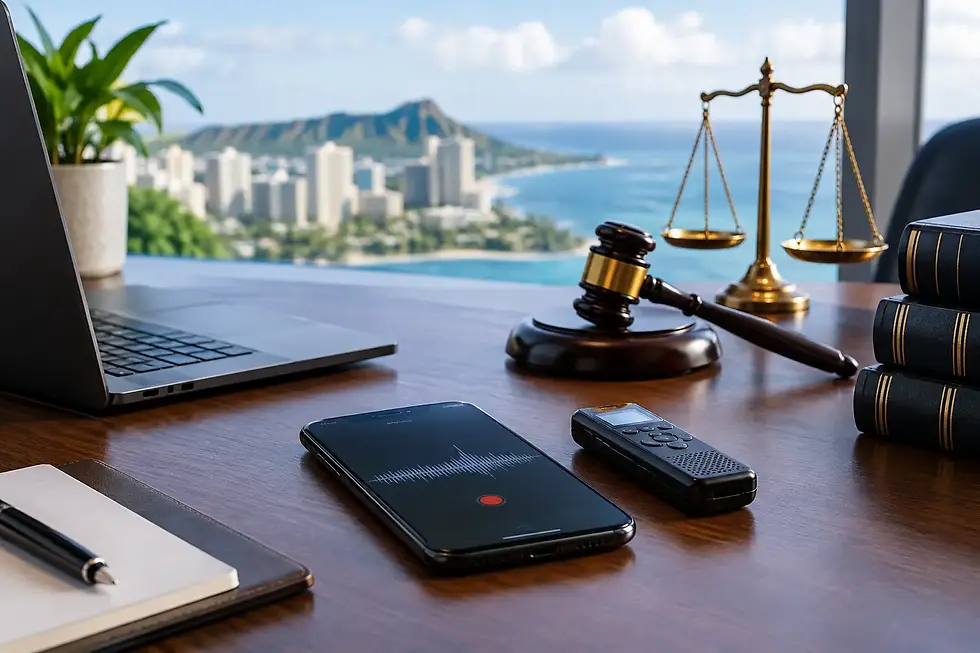
Digital evidence illustrates the issue clearly. A screenshot may establish that someone saw a message on a screen, but it may not establish the full conversation, account ownership, date context, or authenticity of the underlying content. Depending on the circumstances, prompt preservation, a forensic examination, account records obtained through lawful process, or witness testimony may be necessary. The appropriate path depends on the client’s authority, the device or platform involved, anticipated litigation, and the evidentiary standard that may apply.
A careful investigator does not overstate what the facts prove. Defensible findings distinguish verified facts from informed inferences and unresolved questions. This preserves credibility, particularly when the matter becomes contested.
Start With the Decision the Investigation Must Support
The scope of an investigation should follow the decision at stake. This is one of the most important conversations a client can have before authorizing work.
For example, a business considering a partnership or acquisition may need due diligence focused on corporate history, litigation exposure, adverse media, operational concerns, and key-person background information. That is different from a criminal defense matter, where the immediate need may be to identify witnesses, test the accuracy of allegations, document scene conditions, or locate exculpatory information before memories fade.
Similarly, an employment investigation may call for a measured review of access logs, communications, policies, and interviews. A rushed accusation based on incomplete information can expose an organization to additional risk. In some matters, the most valuable conclusion is that the available evidence does not support a claimed theory. That is still meaningful intelligence when it prevents a client from committing resources to an unsupported position.
Counsel should also determine whether the engagement is intended to support litigation, internal decision-making, settlement evaluation, regulatory response, or a preliminary assessment. This helps define reporting expectations, preservation priorities, confidentiality controls, and the need for expert or fact-witness testimony.
Legal Boundaries Are Part of the Methodology
Effective investigations operate within legal, ethical, and practical limits. Licensing requirements, privacy laws, recording-consent rules, data-access restrictions, workplace policies, court orders, and jurisdictional boundaries can all affect what may be done and how results can be used.
A legitimate investigator should not promise access to private communications, protected records, or location data without lawful authority. Nor should an investigator encourage pretexting, unauthorized account access, improper device searches, or conduct that could compromise a client’s legal position. A result obtained through an improper method may be unusable, damaging, or both.
This is especially relevant in matters that cross state or national borders. A firm headquartered in Hawaii may support a local dispute involving witnesses or records on the mainland, but the work must be evaluated for licensing, local law, data handling, and coordination requirements. International matters require even greater caution because legal authority, privacy expectations, and available remedies vary substantially by jurisdiction.
Preservation Often Matters More Than Speed
Speed can be essential, but speed without a preservation strategy may undermine the very evidence a client needs. Emails can be deleted, cloud accounts can change, surveillance footage can be overwritten, mobile devices can be reset, and online content can disappear without notice.
When a matter may lead to litigation or regulatory review, counsel and investigators should consider what materials require preservation, who controls them, and how collection can be documented. A defensible process commonly includes clear instructions, contemporaneous notes, source tracking, secure storage, and a record of transfers or handling where appropriate.
The level of formality should match the anticipated use of the evidence. A preliminary business inquiry may not require the same procedures as a forensic mobile-device examination expected to be challenged in court. Still, even early-stage work benefits from organization. A scattered folder of screenshots, notes, and downloaded files becomes harder to authenticate and explain as time passes.
What to Evaluate Before Retaining an Investigative Firm
The selection process should focus on capability and fit, not just a service label. Clients should understand who will perform the work, whether the firm is properly licensed for the jurisdiction, how it handles confidential information, and whether it has experience with the evidence type at issue.
Ask how the firm scopes assignments and communicates limitations. A disciplined investigator should be willing to explain when a requested tactic is unlikely to produce meaningful results, when another method may be more appropriate, and what facts would change the recommendation. Clients should also ask about reporting practices, documentation, digital-security measures, conflicts of interest, and the availability of testimony if the matter proceeds.
Technical competence deserves particular attention when a case involves devices, online accounts, social media, video, or electronically stored information. General investigative experience is valuable, but digital evidence may require specialized tools, validated procedures, and personnel who understand the difference between viewing data and conducting a forensically sound examination.
A Measured Investigation Protects the Client’s Position
Investigations can be highly effective, but they do not eliminate uncertainty. A witness may decline an interview. A record may no longer exist. A device may be inaccessible. Surveillance may establish activity but not intent. These are not necessarily failures. They are limitations that should be identified early and reported plainly.
Kiamalu Consulting & Investigations approaches each engagement by examining the objective, available facts, legal considerations, and practical constraints before recommending a tailored strategy. That consultative process helps clients direct resources toward work that is relevant, lawful, and proportionate to the stakes.
When the facts matter, the question is not whether an investigation can produce more information. The better question is whether it can produce reliable, properly obtained information that helps the client make the next decision with greater confidence.


Comments