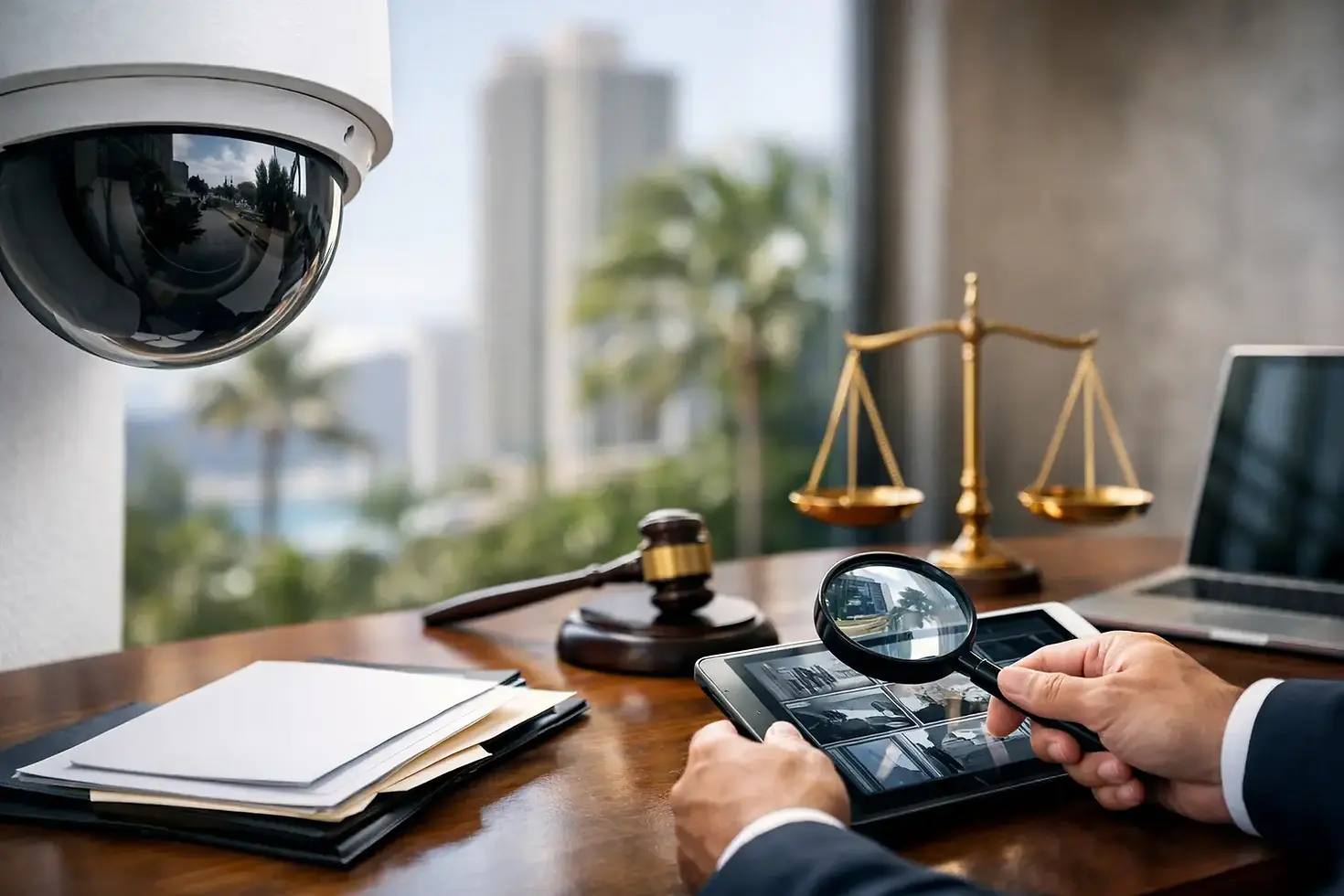
Is Surveillance Legal? Rules That Shape Evidence
A camera may record conduct in plain view, while a concealed recorder in the same situation may create serious legal exposure. That distinction is why the question, “is surveillance legal,” cannot be answered with a simple yes or no. Lawfulness depends on what is being observed or collected, where it occurs, how it is obtained, who is involved, and the purpose for which the information will be used.
For attorneys, businesses, insurers, and private clients, the practical objective is not merely to obtain information. It is to obtain verified information through methods that protect privacy rights, comply with applicable law, and support defensible findings if the matter proceeds to litigation, an administrative hearing, or an internal investigation.
Is Surveillance Legal in the United States?
Surveillance can be lawful when it is conducted within legal boundaries. Those boundaries are shaped by federal law, state law, local rules, civil privacy claims, property rights, employment policies, and the particular facts of the matter. A method that is acceptable in one jurisdiction or setting may be prohibited in another.
Visual observation in a public place is often lawful because people generally have a reduced expectation of privacy in activities exposed to public view. An investigator may be able to document a subject entering a business, operating a vehicle on public roads, or attending an event visible from a lawful vantage point. The analysis changes if the investigator enters private property without permission, peers into a location shielded from public view, or uses technology to capture details that an ordinary observer could not lawfully obtain.
The status of the person conducting surveillance also matters less than many assume. A licensed private investigator does not have law enforcement authority and is not exempt from trespass, privacy, recording, harassment, stalking, or data-access laws. Professional licensing supports competence and accountability. It does not create permission to use prohibited methods.
The Core Question: Was There a Reasonable Expectation of Privacy?
Privacy expectations are central to surveillance analysis. A person standing on a public sidewalk generally cannot expect that every passerby will disregard conduct visible to the public. That same person may reasonably expect privacy inside a residence, hotel room, medical examination area, restroom, or other location intended to be private.
Physical location is only part of the analysis. The method used can affect the result. Recording a storefront from a public sidewalk is materially different from placing a hidden camera in a private office, using a device to look through closed window coverings, or accessing a password-protected account. The more intrusive the technique, the more carefully it should be evaluated before any collection begins.
This is also why a legitimate objective does not automatically justify a particular surveillance method. An employer may have a valid reason to investigate suspected theft, for example, but that does not permit recording employees in areas where privacy is expected. A spouse’s suspicion of misconduct does not permit installing monitoring software on another person’s device or entering an account without authorization.
Audio Recording Requires Separate Analysis
Audio is often more legally sensitive than video. Federal and state wiretap and eavesdropping laws can restrict the interception or recording of oral, telephone, and electronic communications. Consent rules vary by jurisdiction. Some states permit recording when one participant consents, while others generally require consent from all parties to a confidential communication.
Hawaii has specific restrictions involving the interception of communications, and the facts surrounding consent, the type of communication, and where the recording occurs may be decisive. A conversation involving people in different states can add further complexity because more than one jurisdiction’s law may be implicated.
The safest professional approach is to treat unconsented audio collection as a legal issue requiring advance analysis, not an investigative shortcut. This includes recording phone calls, placing recorders in offices or vehicles, capturing conversations through a camera system, and using remote-access or monitoring tools. A recording that appears useful can become a liability if it was obtained unlawfully.
GPS Tracking, Cameras, Drones, and Digital Monitoring
Technology can expand an investigation’s capabilities, but it also expands the legal and evidentiary questions. GPS tracking, vehicle telematics, camera systems, drones, social media review, and mobile-device data each require a distinct assessment.
GPS tracking may depend on who owns or lawfully controls the vehicle, whether the driver has notice, applicable state statutes, and the intended duration and scope of monitoring. Attaching a tracker to a vehicle without proper authority can create criminal and civil exposure. A business monitoring its fleet may have stronger grounds when it owns the vehicles and has clear written policies, but even then, the policy should be tailored to legitimate business needs.
Camera placement requires similar discipline. Security cameras in public-facing entrances, loading areas, or common workplace spaces may be appropriate when they serve a defined security purpose. Cameras in restrooms, changing areas, private residences, or other highly private settings are generally prohibited or present exceptional legal risk. Hidden cameras should never be treated as routine investigative tools.
Drones introduce airspace, safety, property, and privacy considerations. The fact that a drone can capture an image does not establish that it should be used. Low-altitude operations, repeated flights over private property, and collection near areas of expected privacy may create legal and reputational concerns that outweigh the potential value of the footage.
Digital monitoring presents another boundary. Publicly available social media content can often be preserved and analyzed, provided the collection is accurately documented. Creating deceptive identities, circumventing privacy settings, accessing private messages, guessing passwords, or installing spyware are fundamentally different actions and may violate platform rules, computer crime laws, privacy laws, or court orders. Lawful access and reliable preservation matter as much as the content itself.
Workplace and Corporate Surveillance
Businesses have legitimate interests in protecting personnel, confidential information, inventory, financial assets, and facilities. Yet workplace monitoring is not unlimited. Employees may have privacy rights depending on the setting, the device involved, the employer’s policies, collective bargaining agreements, and applicable law.
Clear policies provide a stronger foundation for reasonable monitoring. An organization may notify personnel that company systems, company vehicles, access-control systems, and common areas are subject to monitoring for security, safety, compliance, or operational purposes. Notice does not cure every issue, but it helps define expectations and demonstrates that the organization considered privacy before a problem arose.
A focused investigation is usually more defensible than open-ended surveillance. If the concern involves suspected data exfiltration, expense fraud, time theft, workplace violence, or conflict-of-interest activity, the investigative plan should identify the allegation, relevant date range, authorized data sources, and preservation requirements. Collecting more information than the objective requires can increase risk without improving the result.
Lawful Collection Is Not the Same as Usable Evidence
Even when surveillance appears lawful, the evidence may have limited value if it cannot be authenticated or explained. A short video clip without date information, source details, continuity records, or context may be challenged as incomplete or misleading. Digital material is especially vulnerable when it has been edited, forwarded, downloaded repeatedly, or captured without preservation of original metadata.
Evidence-focused investigations document the method of collection, the date and time, the investigator’s lawful vantage point, the equipment used when relevant, and the handling of each item after collection. Original files should be preserved whenever possible. Reports should distinguish observed facts from reasonable inferences and should avoid conclusions the evidence cannot support.
For matters involving anticipated litigation, counsel should be consulted early. Attorney-directed investigative work can help align the scope of collection with case strategy, discovery obligations, privilege considerations, and the evidentiary standards likely to apply. It also allows the investigative plan to address potentially sensitive issues before evidence is gathered in a manner that cannot be undone.
Questions to Resolve Before Surveillance Begins
Before authorizing surveillance, decision-makers should define the legitimate purpose, identify the subject and location, and determine whether the activity will involve audio, tracking, digital access, or entry onto property. They should also consider whether consent, notice, a warrant, a court order, or owner authorization is required.
Jurisdiction deserves particular attention. A case may involve a Hawaii-based organization, a subject traveling across state lines, cloud-based data stored elsewhere, and communications with participants in multiple states. Those facts can affect recording consent, data access, licensing, and the availability of remedies if something goes wrong.
A disciplined investigative assessment should also ask whether surveillance is proportionate. Sometimes records analysis, interviews, open-source research, device preservation, or a targeted background inquiry can answer the relevant question with less intrusion and lower legal risk. Surveillance is a method, not a default solution.
When the stakes are high, the right starting point is a clear objective and a lawful plan. Information collected with discretion, careful documentation, and respect for legal boundaries is far more likely to provide the clarity and peace of mind a client actually needs.


Comments